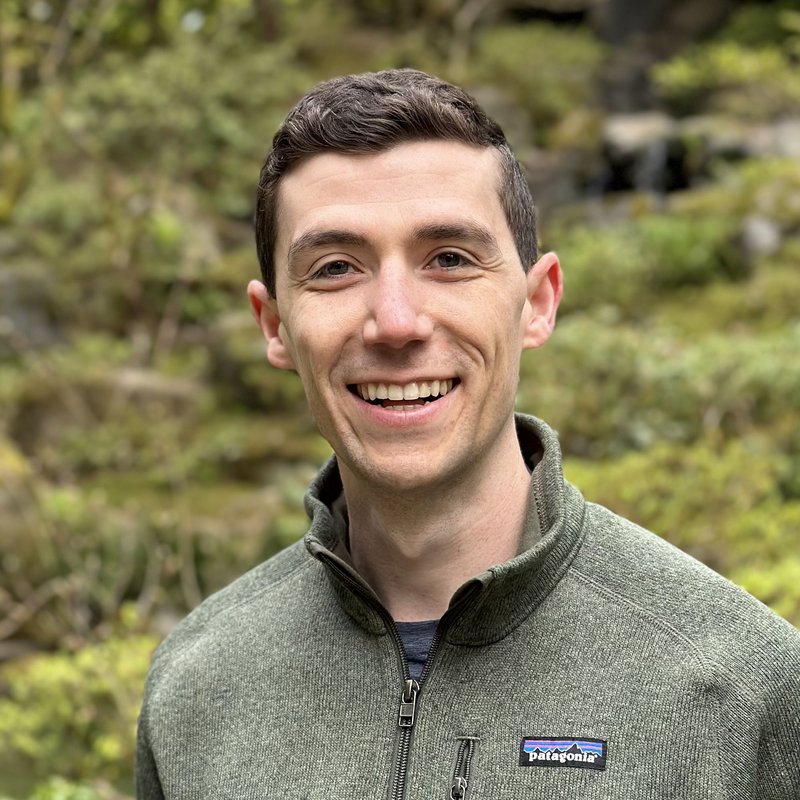
I’m currently a Camera Systems Architect at Apple, combining highly optimized camera hardware solutions with state-of-the-art software to provide market-leading imaging experiences. I work at the intersection of optics, computer vision algorithms, and scientific programming, using data-driven analysis and simulation to guide camera design decisions.
I was previously a PhD student and postdoctoral researcher at Stanford University, where I worked in the Schleier-Smith Lab to develop new tools for quantum engineering with cold atoms and Rydberg states. I was supported by the NDSEG Fellowship and received my PhD in Applied Physics. Research highlights:
- Quantum-enhanced sensing: Performed experimental demonstrations of spin squeezing in a system with finite-range interactions, enabling precision measurements beyond the standard quantum limit for atomic clocks and electromagnetic sensors.
- Quantum simulation: Demonstrated local and dynamical control of atomic interactions by optically coupling to Rydberg states, enabling experimental emulation of the transverse-field Ising model and observation of quantum phase transitions.
- Quantum computing: Proposed a physical implementation of Grover’s search algorithm that encodes the NP-complete number partitioning problem in couplings to a central spin, providing quantum speedup without requiring prior knowledge of solutions.
Alongside my quantum physics research, I was involved in Stanford’s optics community, earning an MS in Electrical Engineering with coursework focused on laser physics and computational imaging. This led to several sensing-related side projects:
- Visualizing breath: Proposed and built Schlieren imaging systems for the Exploratorium and Stanford Ophthalmology to visualize exhaled breath plumes and study face-mask airflow, informing public education and clinical safety guidelines during
COVID-19 . - Apple Biophotonics internship: Developed an OCT-inspired sensing platform to measure optical path length distributions in scattering media, featuring an optical heterodyne modulation scheme compatible with the coherent detection of speckle-field signals.
- Multispectral camera: Designed and built a low-cost multispectral camera that uses a high-resolution visible image to enhance a low-resolution thermal image. Developed a multispectral image registration algorithm with VIS+LWIR image fusion.
Prior to Stanford, I studied physics at at UC Santa Barbara’s College of Creative Studies, with an emphasis on original undergraduate research in the Weld Lab.